Edocx


Easy, Fast, and Secure Electronic Invoicing

As an authorized Technology Provider by the DIAN, we offer a complete service for the generation and electronic transmission of invoices, credit/debit notes, electronic payroll, equivalent documents, and support documents. We have a user-friendly and intuitive web platform that allows the issuance of documents individually, ideal for companies that require a direct and easy-to-use solution.

However, our main strength lies in integration through service APIs with ERP systems, allowing the entire process of issuing and receiving electronic documents to be automated.

  • Greater operational efficiency
  • Error reduction
  • Time savings

We are committed to the highest standards of quality, security, and availability, backed by our ISO 27001 certification.

  • Confidentiality
  • Information integrity
  • Guaranteed availability


How does it work?

1. Sign up

Create your account on our platform in just a few minutes and start configuring your invoicing.

2. Generate your invoices

Issue electronic invoices in compliance with DIAN regulations quickly and easily.

3. Send and control

Send, check, and manage your invoices anytime from any device.

Benefits

Security

Your documents are protected with the highest standards of digital security.

Agility

Generate invoices quickly and without complications, optimizing your internal processes.

Productivity

Increase your company’s efficiency with tools designed to simplify your work.

DocxFlow Module

DocXFlow is a robust document management system developed by Makro Soft Ltda and operated by more than 25 Chambers of Commerce, complying with the regulations required by the National Archives. DocXFlow includes a module specially developed for the reception, processing, organization, visualization, and automatic storage of electronic invoices. Among its main features are:

Automatic Reception

Extracts attached invoices from emails and automatically forwards them to the DocxFlow system.

Automatic Organization

Document organization through Workflow for management, or through Electronic File Archives that comply with the regulations of the National Archives and remain available for consultation.

Traceability

Graphic visualization of the status and processes of each document.

Metadata

Creation and editing of metadata for each document.

Frequently Asked Questions

It is a document that replaces traditional paper invoices with full legal validity, but in electronic format. In other words, it is a document that supports the transactions of sales of goods or services and is generated in a computer system, ensuring the authenticity of its origin, the integrity of its content, and enabling compliance with requirements related to issuance, receipt, rejection, and storage.

The DIAN establishes the following characteristics for an Electronic Invoice:

  • The electronic invoice must be generated in XML UBL V2.0 format.
  • It must carry the consecutive numbering authorized by the DIAN.
  • It must comply with the requirements of 617 ET and specify the consumption tax when applicable.
  • It must include the electronic signature to guarantee authenticity, integrity, and non-repudiation of the invoice.
  • It must include the Unique Electronic Invoice Code (CUFE).

Source: https://www.dian.gov.co

To generate an electronic invoice, it is necessary to have a system (software) that complies with all the conditions established in Decree 2242 of 2015. For this, the taxpayer has two main options:

  • Develop their own electronic invoicing system that complies with all technical and legal requirements established by the DIAN.
  • Hire the services of an authorized PST (Technology Service Provider), such as Edocx, a system operated by Makro Soft Ltda. You can consult the DIAN’s authorized providers here.

Once the taxpayer defines their method of electronic invoicing, the invoice generation process will depend on whether they have an ERP and whether it allows full integration with the PST. If the taxpayer does not have an ERP or does not wish to integrate their invoicing system with it, they can use a service like Edocx, which allows them to issue electronic invoices under all the conditions established in Decree 2242 of 2015 from an independent web platform.

See here how to invoice electronically through the Edocx independent web platform.

Source: https://www.dian.gov.co

  • The first thing to consider is that to select a suitable electronic invoicing PST, it is best to get proper advice. At Edocx, we provide this Free Advisory Service.
  • If you use an ERP and it does not offer electronic invoicing, you must find an independent PST like Edocx to invoice electronically. However, it is your ERP provider’s exclusive responsibility to provide the PST with all the necessary information and support to enable full system integration, making electronic invoicing easier for you.
  • At Edocx, our goal is always to enable you to invoice as quickly and easily as possible, including automated data submission processes. However, to achieve this, your ERP provider’s cooperation is necessary.
  • If, for some reason, ERP-PST integration is not possible, Edocx offers an independent web platform that allows you to issue electronic invoices without needing ERP integration. See here how to invoice electronically through the Edocx independent web platform.
  • Remember that you are free to choose the electronic invoicing PST you prefer, and it is the exclusive decision of your ERP provider whether or not to facilitate integration with the PST you choose.

Of course. In this case, you have two options that depend exclusively on your ERP’s willingness to allow and facilitate integration with Edocx or any PST:

  • If your ERP facilitates integration, all invoicing information and processes will be carried out automatically from the ERP through Edocx.
  • If the ERP does not facilitate integration, your invoicing volume is not very high, or you simply do not want ERP-Edocx integration, you can issue invoices directly on our web platform. Here you can see how.
  • Yes, it is possible, since having an ERP is not required to invoice electronically with Edocx. If you generate very few invoices or your ERP does not allow ERP-PST integration, we provide our Web Platform so you can invoice electronically quickly, securely, and easily.
  • The Edocx Web Platform is an independent service that allows you to handle everything related to the generation, receipt, sending, storage, and other activities associated with electronic invoicing documents. Here you can see how.

At Edocx, we offer customized solutions tailored to your needs. Whether you are a high-volume invoicer or generate very few invoices, please Contact Us so we can advise you on the best solution for your business.

At Edocx, we offer customized solutions tailored to your needs. The cost of our service varies depending on:

  • The number of invoices generated over a period of time.
  • The ERP integration method.
Documentation and Archiving Document Management Electronic Archive Digital File Document Digitization Document Classification Document Preservation Document Retention Retention Schedule Document Life Cycle Document Transfer Document Disposal Central Archive Historical Archive Records Management

Doxcflow iconDocXflow


Your digital copilot to achieve the Paperless strategy in your organization

DocXflow Electronic Archival Document Management System (SGDEA) transforms traditional document management into a fully digital, efficient experience aligned with national regulations. From registration to final preservation, our solution guarantees the traceability of all your physical and electronic documents.

Why choose DocXflow?

Comprehensive Management

Complete control of the document life cycle: creation, registration, archiving, and final disposition in compliance with Colombian regulations.

Full Traceability

Each document records its responsible party, status, and actions, facilitating audits and control.

Advanced Security

Authentication, digital signature, and auditing to protect document integrity.

Automation

Smart workflows for review, approval, and publishing, reducing errors and processing time.

Cloud Access

Secure availability from any device, with automatic backups.

Agile Collaboration

Teams working simultaneously with version control and centralized comments.

Regulatory Compliance

Aligned with the National Archives, Law 594 of 2000, and international standards.

Electronic Signature

Documents signed with full legal validity and audit records.

System Integration

Compatible with ERP, CRM, and other enterprise platforms to automate processes.

Sustainability

Reduces paper consumption and promotes eco-friendly office practices.

Time Savings

Optimized processes that reduce response times for procedures and requests.

Real-time Indicators

Dashboards with document management metrics for quick decision-making.

Transformation with DocXflow

Before

  • Manual and slow processes
  • Difficulty in audits
  • High paper consumption
  • Risk of document loss
Before with manual processes

After

  • Workflow automation
  • Traceability and security
  • 100% digital management
  • Agile and reliable access
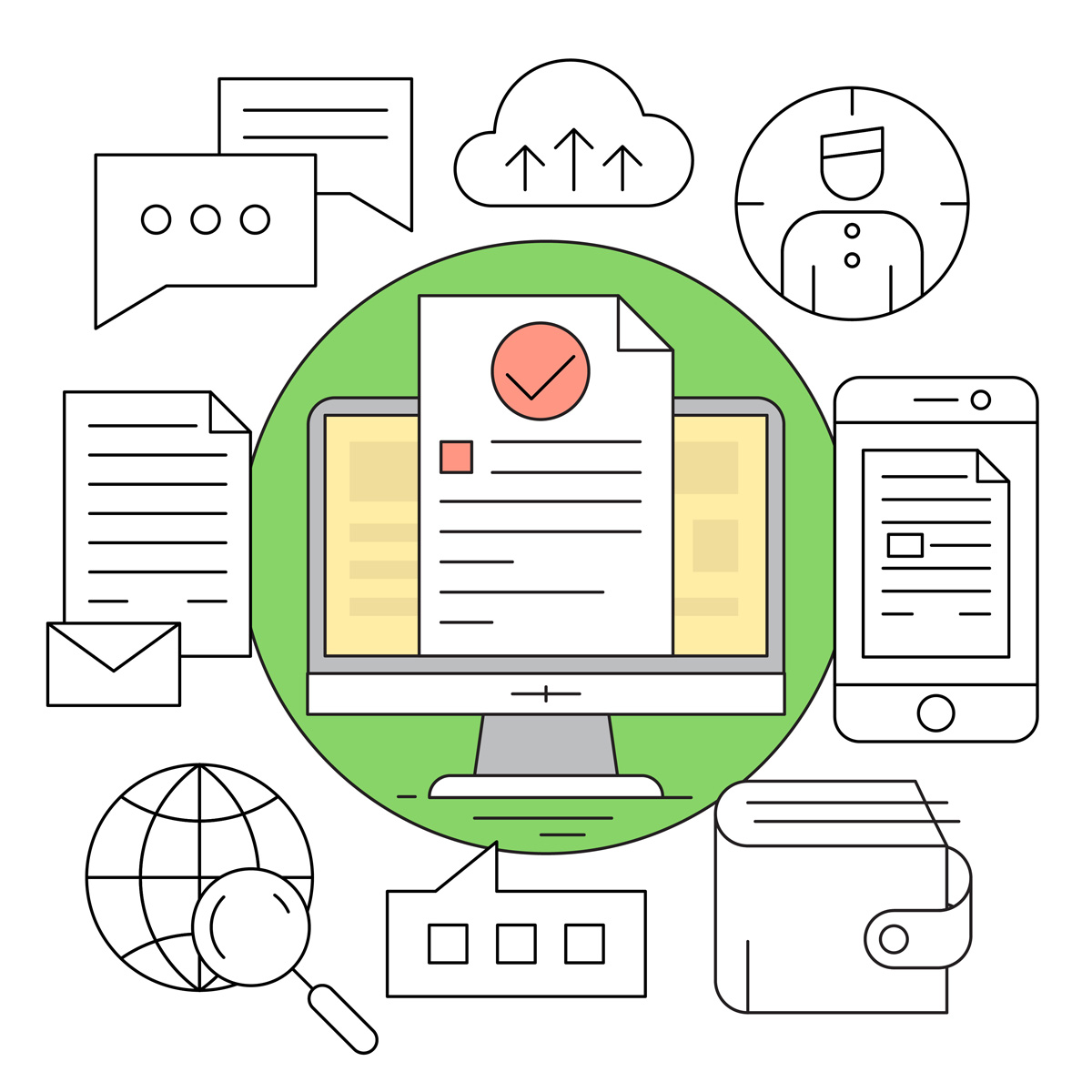
After with digital processes

Success Stories

Cauca Chamber of Commerce

Implemented DocXflow, reducing document processing times by 60%, with full traceability and version control. It leverages integration with RUES and JSP7 to automate registry processes.

Government of Cauca

Digitized its historical archive and improved the efficiency of internal processes with automated workflows and digital signatures. Massive registration and traceability improved citizen services. "DocXflow has allowed us to modernize our processes without losing the document control required by law." – Archive Manager, Government of Cauca

Chamber of Commerce of Manizales for Caldas

"As a document manager, DocXflow has been the best ally in implementing a Document Management System. The parameterization of TRDs, the registry and administrative modules, and the Correspondence Window have been of great help in this transformation and change in how we manage the documents and information produced in the entity." – Sandra López, Document Management Coordinator

Clients who trust us:

What is Makro Soft SaS?

Makro Soft SaS. is a company dedicated to creating high-quality technological solutions that contribute to improving the effectiveness of organizational processes, optimizing the management of their resources through the adoption of technologies that facilitate the administration, generation, delivery, reception, acceptance, rejection, display, and preservation of electronic documents under the service model, contributing to the economic and social development of the community.


What makes Makro Soft SaS different?

Makro Soft SaS. is characterized by its rigorous quality and information security policies, focused on meeting customer needs and expectations, guided by values such as responsibility, compliance, respect, reliability, and confidentiality, both towards the company itself and its stakeholders or reference groups. We are also distinguished by more than 20 years of experience in the technology industry and the high level of satisfaction reported by those who use our services.

Mission

Makro Soft SaS. is a company dedicated to creating high-quality technological solutions that contribute to improving the effectiveness of organizational processes, optimizing the management of their resources through the adoption of technologies that facilitate the administration, generation, delivery, reception, acceptance, rejection, display, and preservation of electronic documents under the service model, contributing to the economic and social development of the community.

Vision

Makro Soft SaS. is a company with technology-based products that will be recognized in the national market as innovative solutions focused on the management of physical and electronic documents.

Integrated Management System (IMS) Policy

Makro Soft SaS. is committed to meeting the needs and expectations of our clients and strategic partners, providing the necessary capabilities and resources to optimize the management of their information in both physical and electronic media. In addition, it recognizes the importance of timely identifying the risks to which this information is exposed, and therefore its duty is to protect it from disclosure, modification, or destruction during the electronic intermediation process, ensuring confidentiality, integrity, and availability of the information while complying with applicable legal requirements.
Our company is based on the continuous improvement of each of the services offered, supported by qualified human talent committed to corporate values. MAKROSOFT constantly works on developing, maintaining, and continuously improving its Integrated Management Systems to achieve its objectives.

Objectives of the Integrated Management System (IMS)

1. Increase customer satisfaction by 90%.
2. Increase electronic services for existing clients by 5%.
3. Increase the effectiveness of continuous process improvement by 75%.
4. Increase employee competencies by up to 80%.
5. Increase employee satisfaction by 90%.
6. Maintain the effectiveness of information security controls above 70% to ensure confidentiality, integrity, and availability.
7. Promote a culture of information security.
8. Reduce incidents that threaten the availability, confidentiality, and integrity of information through a strategy based on risk identification, mitigation, and management.

Internal Organization

Makro Soft SaS. is internally organized by processes, each led by a manager and/or coordinator. Individuals who support the process leader in different activities are called Assistants.
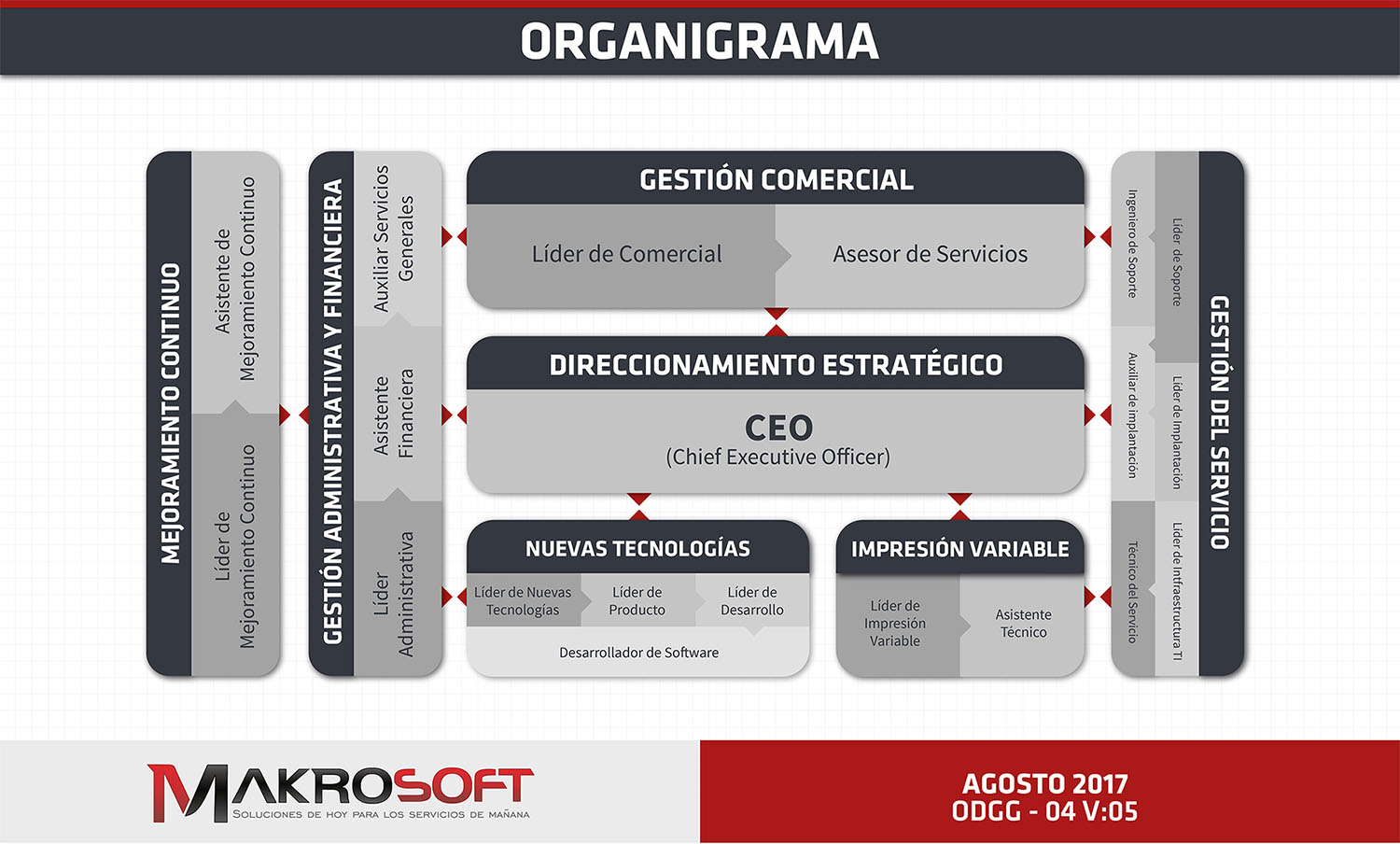

MakroSoft, Organizational Chart, Quality

Historical Review

The company Makro Soft SaS. began its activities on March 31, 1995, established as a limited liability company. Its initial partners analyzed the software development business as something profitable for the future. With capital that existed only in books, the company initially tried to enter businesses such as hardware sales. From its first deals, a cash surplus remained, which served as the foundation to continue with the initial project: “software development.” By early 1996, the company was in the hands of only two partners, which created differences that prevented software projects from being carried out. The company then had to enter new markets such as data network construction, which was very profitable at the time due to high demand. Through these businesses, market needs for technological services were identified, which revealed the potential of the utilities market. Although complex due to entry requirements, it allowed competition and was favorable for the company’s finances. By the end of 1996, Colombia began to introduce certain standardization regulations for public utility billing, which required technological changes in document printing, especially invoices. These had to include special features such as barcodes, which were not possible with the type of printing used at the time. By then, the company had researched enough tools to perform this work and had made contacts for the purchase and distribution of laser printers and mass-reading systems, which facilitated entering that market. By mid-1997, the company sold its first printing and reading system to a telecommunications company (EMTEL). This printing system required additional software development, which had not initially been planned. This circumstance allowed one of Makro Soft SaS.’s partners to take part in the application development and gain firsthand knowledge of the details of these types of software projects, which were uncommon and involved a certain level of complexity that made them highly specialized and valuable in the market. In March 2009, the company began operating in a 330-square-meter facility located in the Santa Clara neighborhood, Crr. 11 No. 8N-90, with improved spaces that allowed continuous improvement, providing suitable areas for processes to operate effectively and efficiently.